
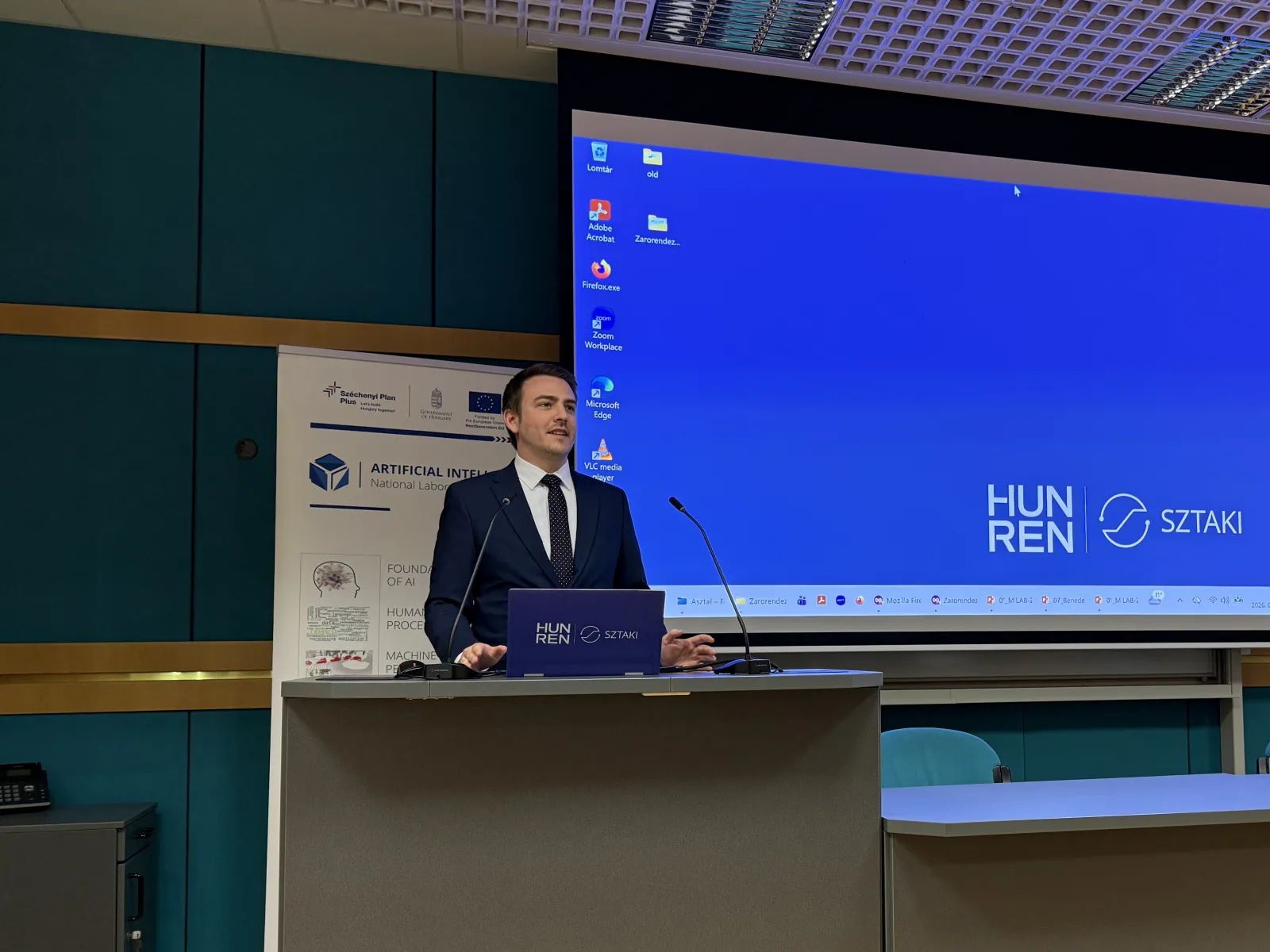
The Artificial Intelligence National Laboratory (MILAB) programme concluded with a series of professional presentations on Thursday in Budapest, hosted at HUN-REN SZTAKI.
The event was opened by László Bódis, Deputy State Secretary for Innovation at the Ministry of Culture and Innovation. László Monostori, Director General of HUN-REN SZTAKI, also welcomed participants and provided an overview of the laboratory’s activities over the past five years. During this period, 11 partners collaborated under the leadership of HUN-REN SZTAKI to strengthen Hungary’s international position in artificial intelligence research and applications. In addition to delivering new research and innovation results, a key objective was to involve young researchers in the laboratory’s work.
The professional programme, which showcased the latest domestic research directions and application opportunities in artificial intelligence, offered a comprehensive overview of both scientific and industrial developments in the field. The morning session focused on theoretical foundations and key mathematical results from recent years, complemented by developments carried out in universities and research institutes. Presentations also addressed practical AI applications, including in the pharmaceutical industry and machine manufacturing, with particular emphasis on predictive maintenance and industrial digitalisation. Healthcare, machine vision research and robotics developments were also highlighted, illustrating how artificial intelligence is already delivering tangible results across various scientific domains. Experiments conducted on quadruped robotic platforms, along with medical applications, demonstrated the practical potential of the technology.
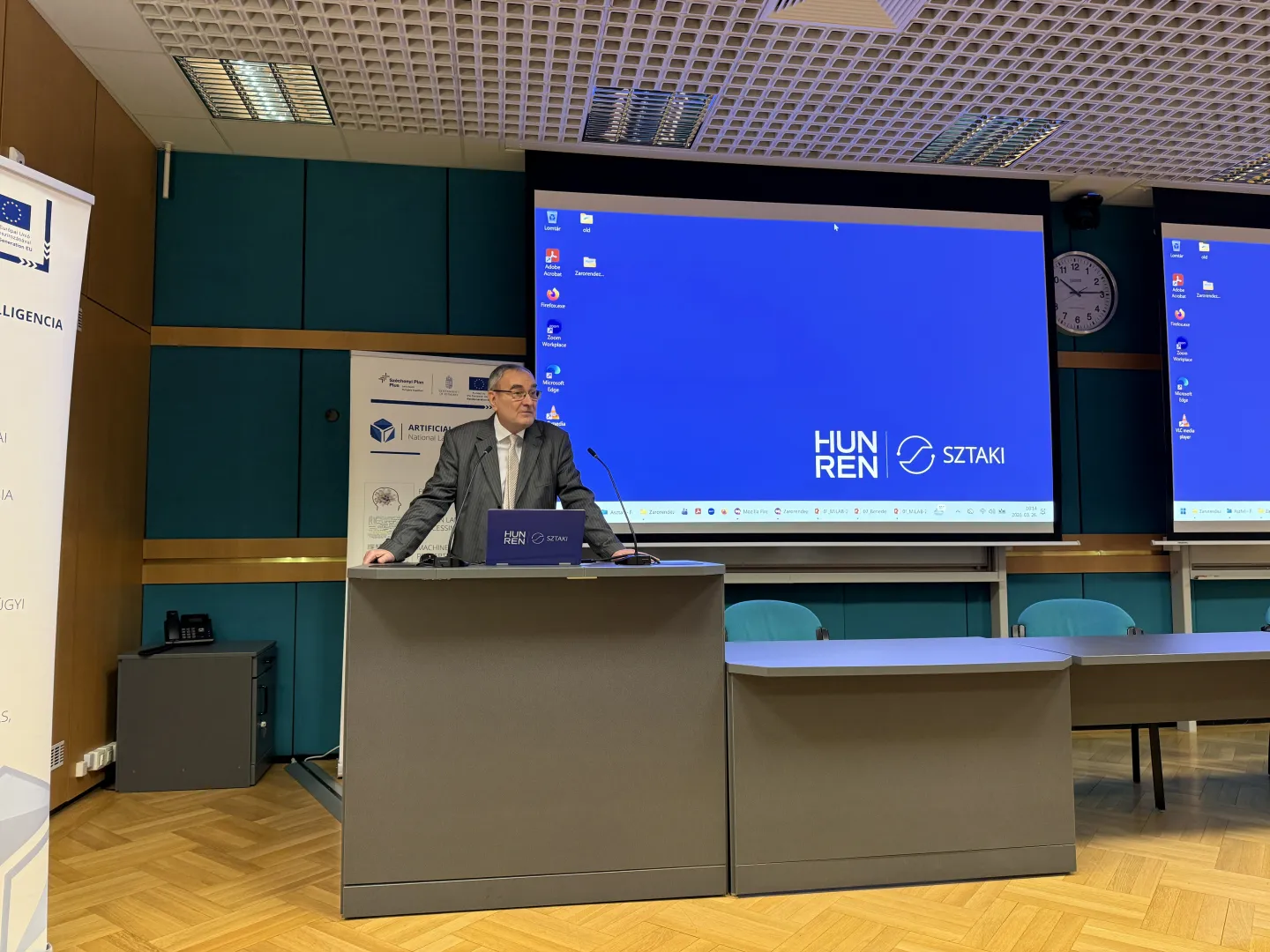
Afternoon presentations shifted towards language technologies and large language models, with special attention to Hungarian language processing and resource-efficient solutions. New types of AI tools supporting expert systems were also discussed, particularly those aiding linguistic and analytical work. The closing session examined the relationship between artificial intelligence and security, including challenges related to autonomous vehicles and the risks associated with the technology. Overall, the event highlighted that Hungary’s AI ecosystem is built on strong theoretical foundations while increasingly expanding its range of practical applications.
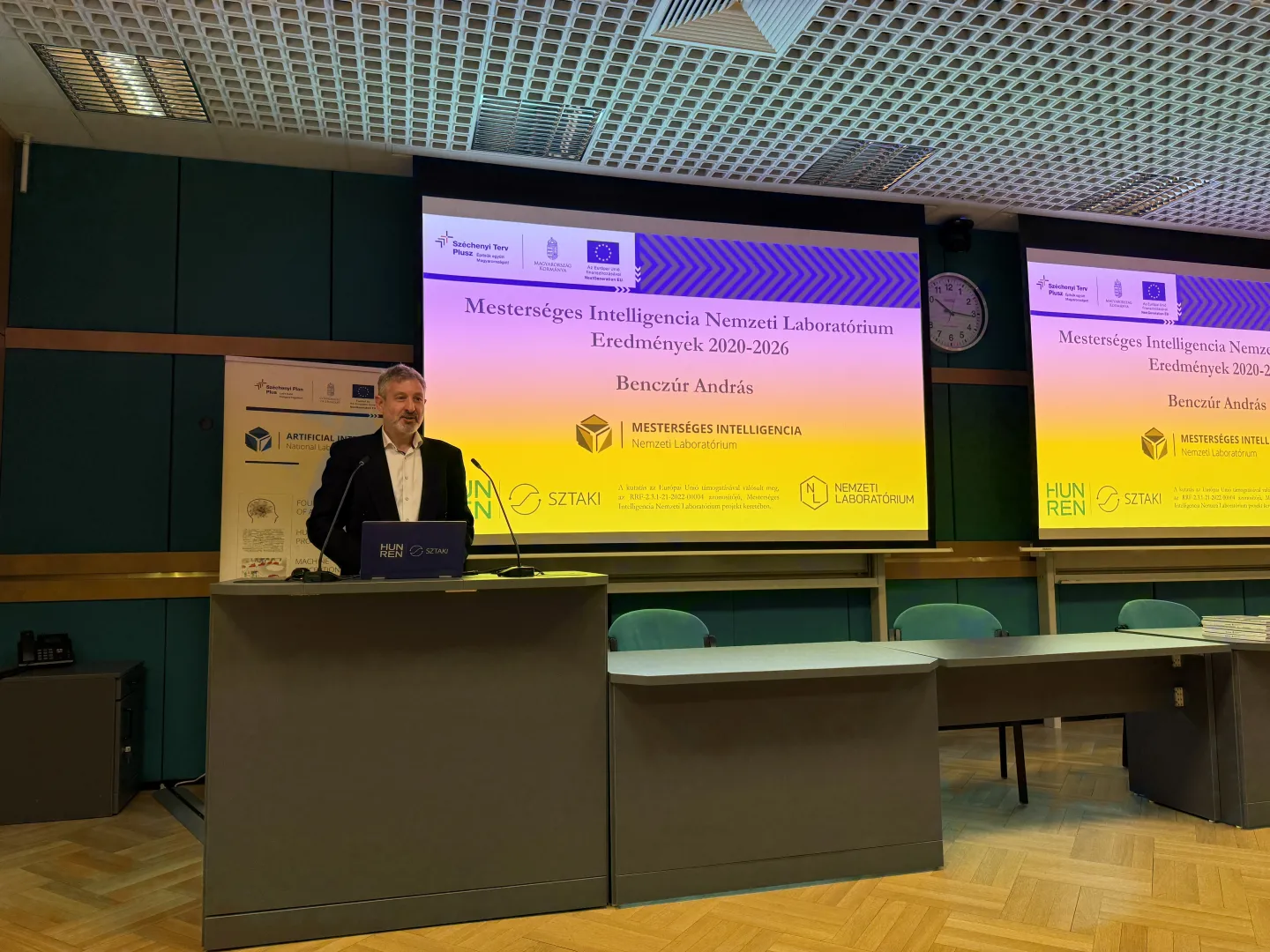
Speaking at the closing event, Deputy State Secretary for Innovation László Bódis recalled that the National Laboratories Programme was launched in 2020 with the aim of establishing research initiatives focused on challenges relevant to society and the economy. He added that another key objective of the project was to foster collaboration among professional partners. He also referred to the Mission-Driven National Laboratories Programme, announced last December with a budget of HUF 20 billion. A total of 48 applications were submitted in response to the call, requesting more than HUF 100 billion in funding. He noted that the call focused on three main areas, each subdivided into three to four subfields.
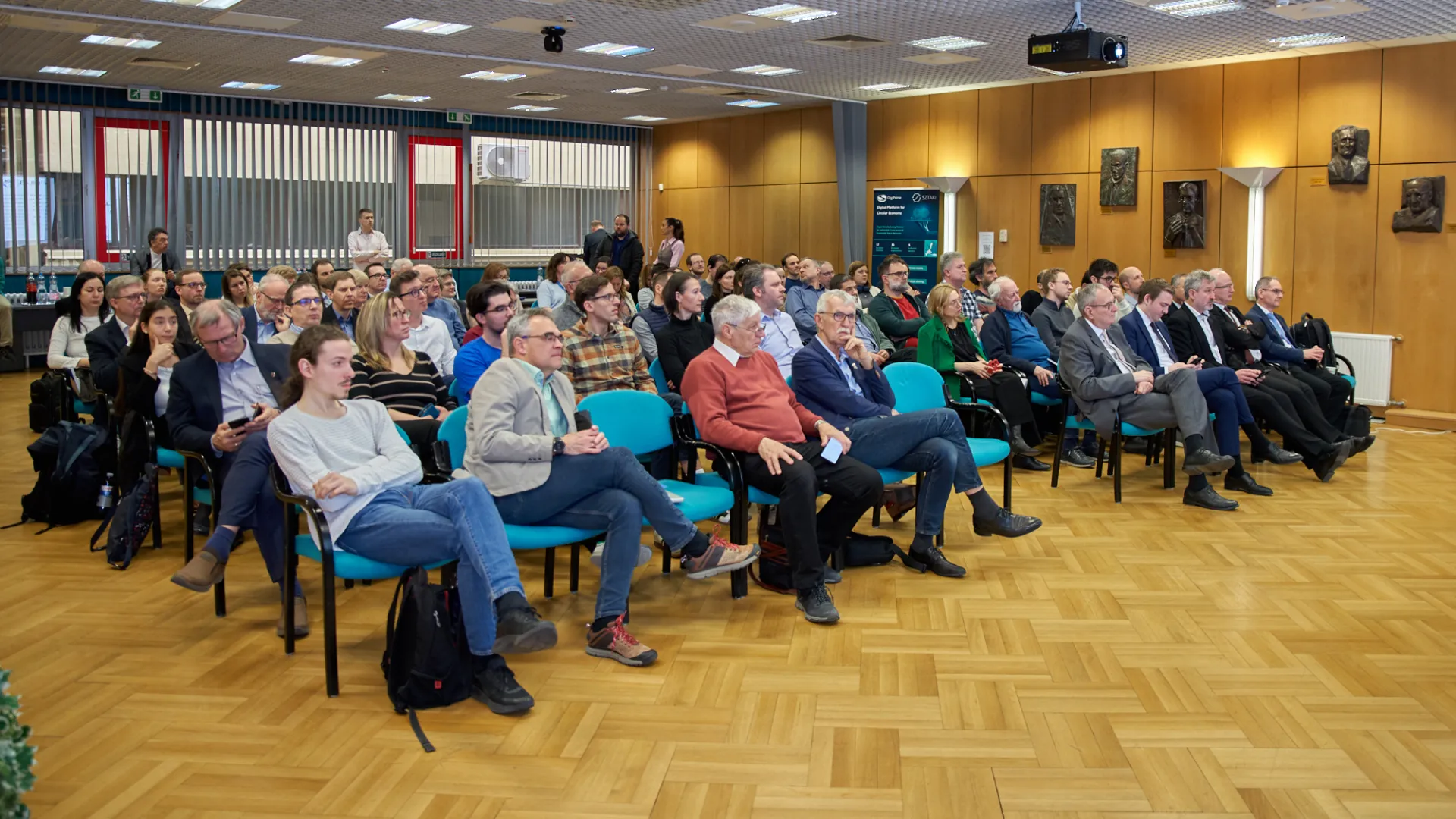
In the field of technology, artificial intelligence, space research and autonomous systems were among the eligible areas, with 14 applications targeting the use of AI across different domains. These represented funding requests totalling HUF 30 billion, accounting for 30 percent of all submitted applications, he added. Hearings for the applications have taken place in recent weeks, and funding decisions are expected in the coming weeks. This will ensure that national laboratories and their research groups can continue their work within a renewed structure. Three key objectives have been defined for this new framework. First, each project must focus on a clearly defined societal challenge. Second, by the end of the 3–4 year development cycles, at least one technology should be developed that can be brought closer to market utilisation, potentially through a startup venture. Third, budget planning must prioritise the involvement of young researchers. The Deputy State Secretary emphasised that the long-term goal is to establish a research funding system built on two major pillars within one to two years. One of these pillars is already in place, namely the National Research Excellence Programme. In addition, they aim to ensure that Mission-Driven Research Programmes are made available annually to the Hungarian research community.